TADPOLE PORTAL
The second confusing thing about Australia are the animals. They can be divided into three categories: Poisonous, Odd, and Sheep.
Jeremy Lee, "The confusing country"
Frogs & Tadpoles
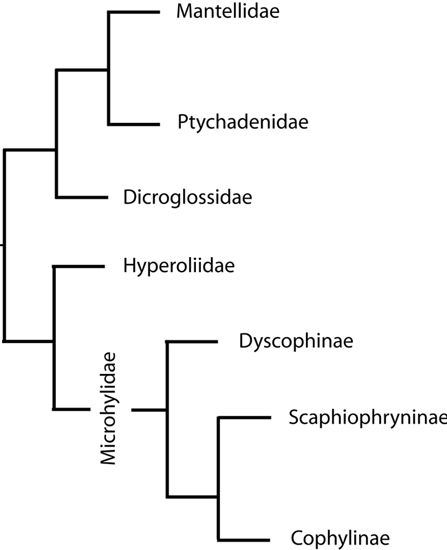
Amphibians of Madagascar are a prime example of the impressive species richness and the extremely high degree of endemism on this old island. All native species are endemic to Madagascar and the Comores. In total, there are up to 465 species known by today. They belong to five families that can be split into six groups of different origin:
-
The Mantellidae are an endemic family (two species are found on the Comran Island Mayotte). This is the largest radiation of frogs on Madagascar and has arrived on this island about 58 mya. The next relatives are Rhacophoridae in Asia.
-
Cophylinae and Scaphiophryninae , two subfamilies of Microhylidae , are a monophyletic group that arrived about 60 mya. Their next relatives can be found in mainland Africa.
-
Frogs of the subfamily Dyscophinae (Microhylidae) also arrived about 60 mya but independent from Cophylinae and Scaphiophryninae. Their next relatives occur in Asia.
-
Hyperroliidae , which can also be found on mainland Africa and Seychelles, are present with a single genus: Heterixalus.Its ancestor came about 22 mya.
-
Ptychadenidae , endemic to Africa south of the Sahara and Madagascar are present with only a single species, Ptychadena mascareniensis. It is a relatively young group on Madagascar.
-
Also relatively recently arrived the Dicroglossidae with Hoplobatrachus tigerinus on Madagascar. This species has probably been introduced by man.
A very detailed description of all these groups as well as an impressive amount of photographs and information on species level can be found in A field guide to the amphibians and reptiles of Madagascar by Frank Glaw and Miguel Vences. This book also provides detailed information on reproduction and tadpoles. If traveling to Madagascar, you definitively need to take this book with you.
Adults
Of course, not all members of the groups introduced above can be found everywhere on Madagascar. Some regions, however, are characterised by a very high species richness. This is especially true for the rainforests in the eastern escarpment where also the Ranomafana National Park is located. There are less species at very high elevations as well as in the dry west. In Ranomafana, where I conducted most of my work, Dicroglossidae, of the Microhylidae the Dyscophinae, genera of Cophylinae, as well as several species from all families are missing. There are still more than 115 species known from this park.
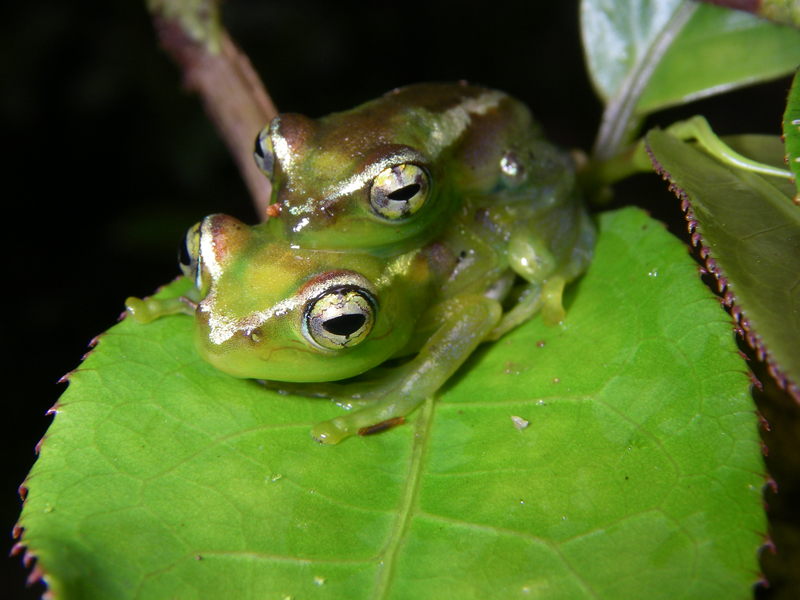
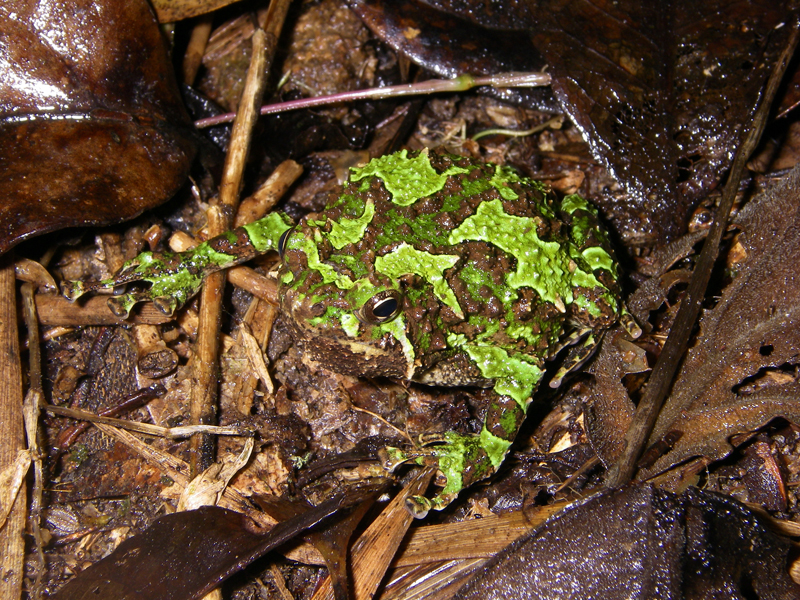
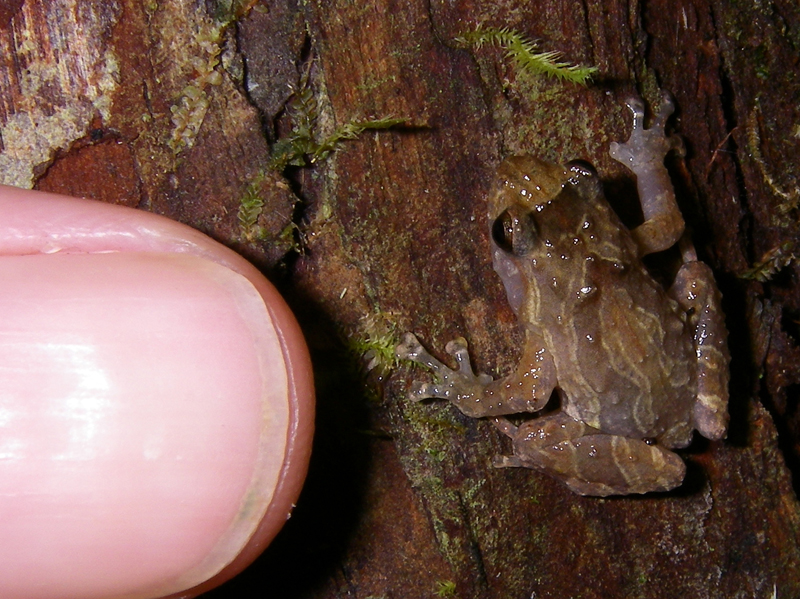
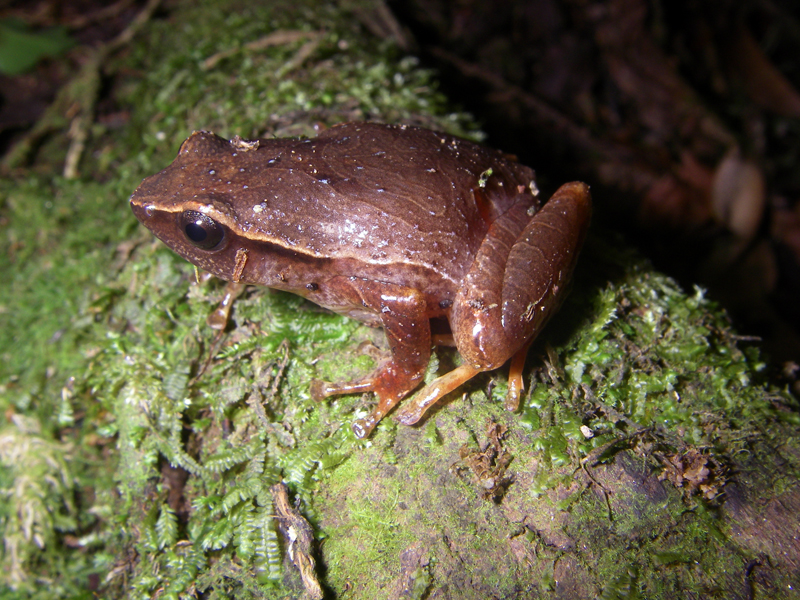
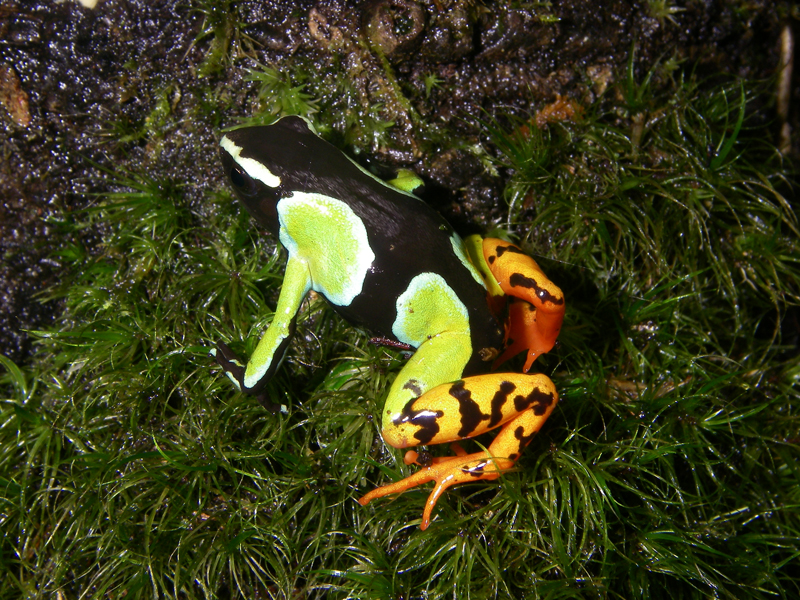
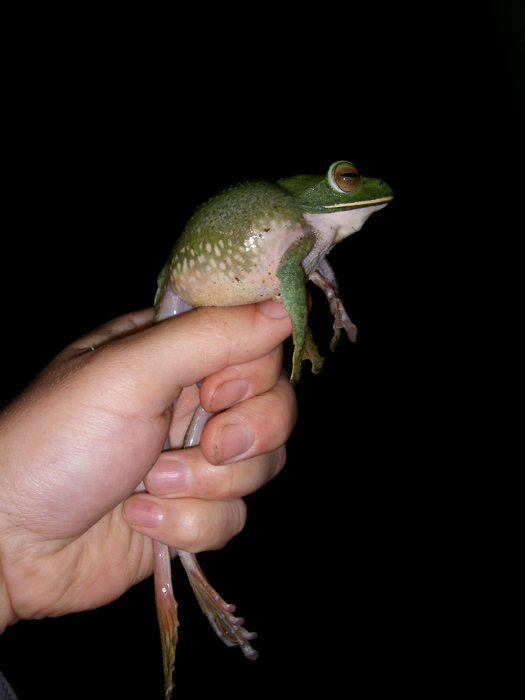
By far not all frogs of the tropics are nicely coloured. In fact, most of them are tiny little brown fellows. There are some conspicuously coloured frogs, such as the members of the genus Mantella (Mantellidae) from Madagascar. Mantella is a pendant to the dart poison frogs (Dendrobatidae) of South America. They are poisenous but harmless for man. Green is also a colour that is widespread, e.g., in the treefrogs of the genus Boophis , which spent most time during the day in the canopy. For some of the groups, colouration helps to identify species. Some groups, however, show a high variability in colouration.
Reproductive diversity
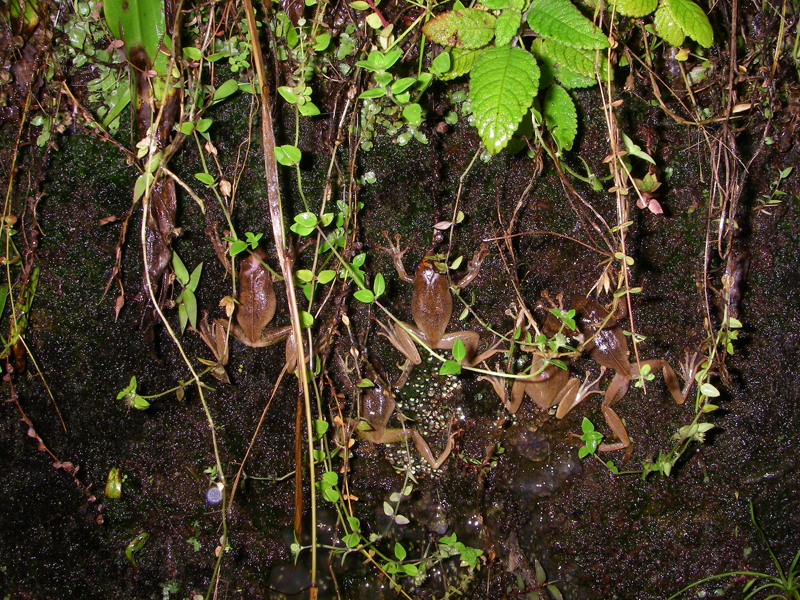
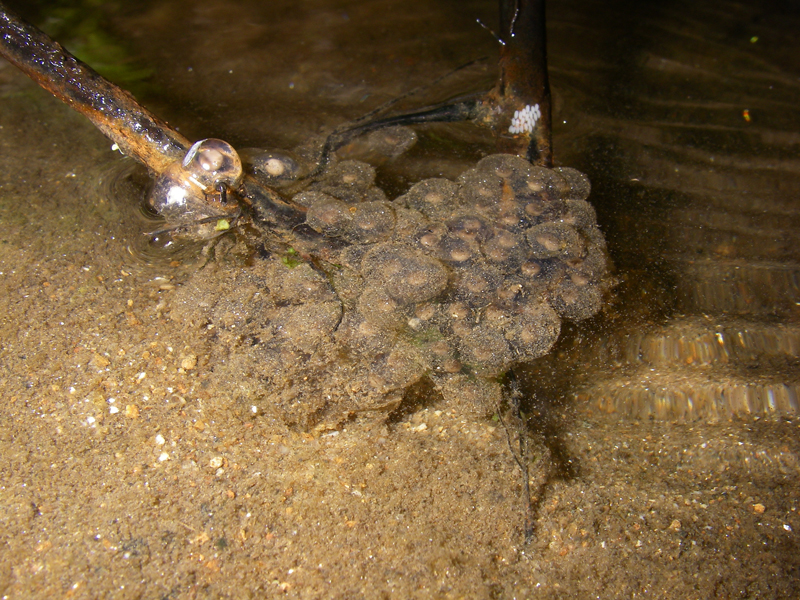
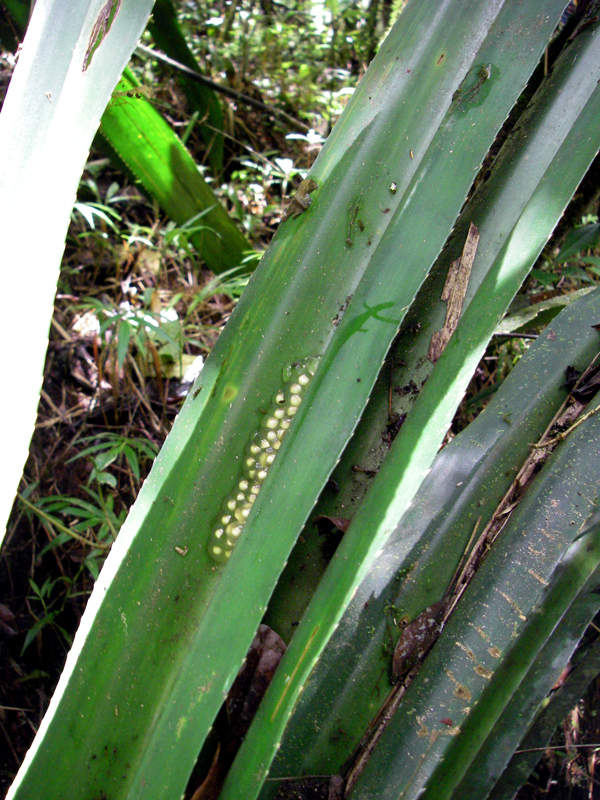
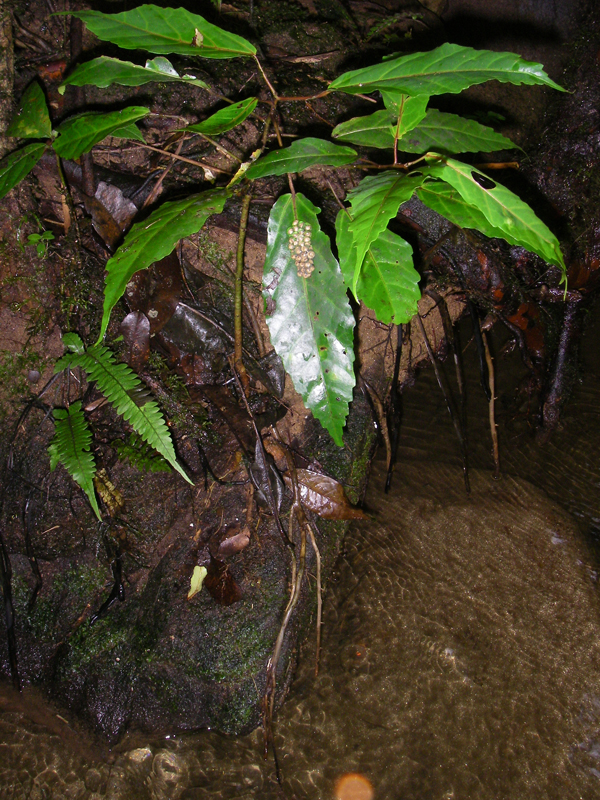
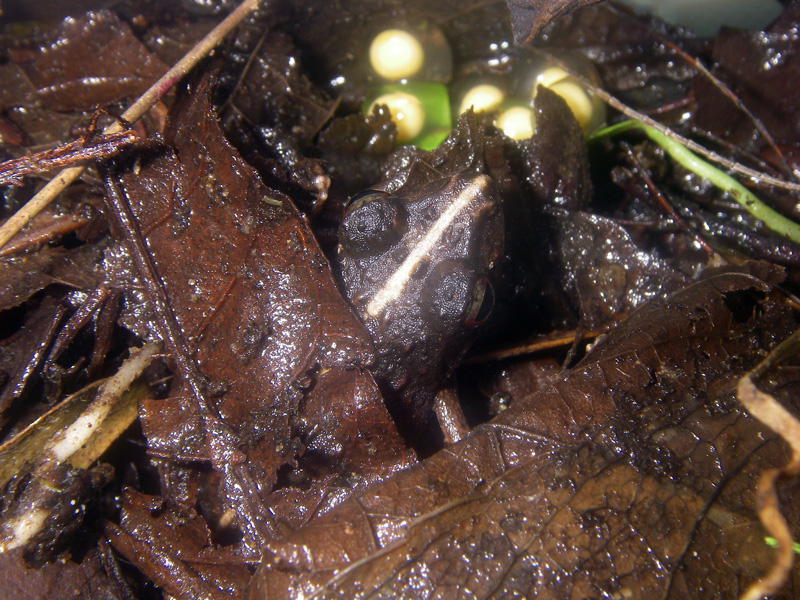
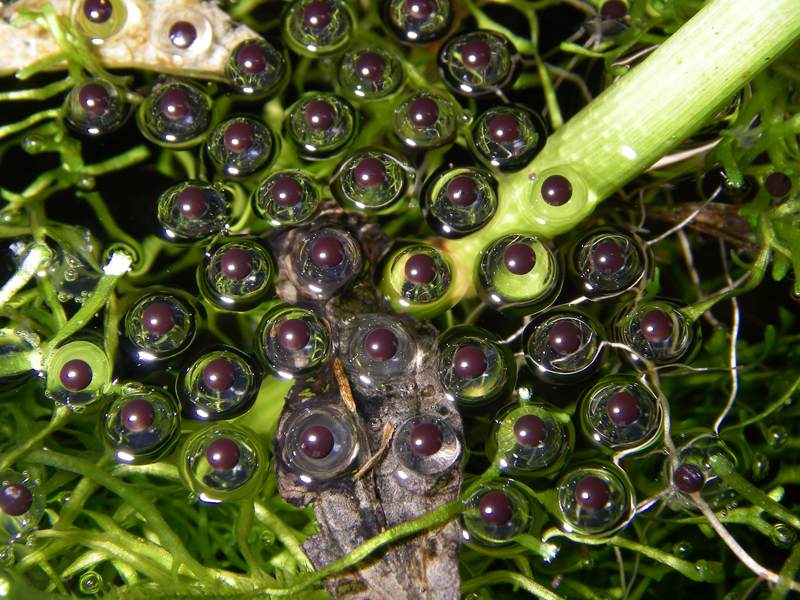
The diversity of reproductive modes of Madagascan amphibians is as impressive as in other tropical regions, despite the relatively small size of the island. All frog species of Madagascar lay eggs with external fertilisation, but there are several differences in mating system, egg deposition, and tadpoles.
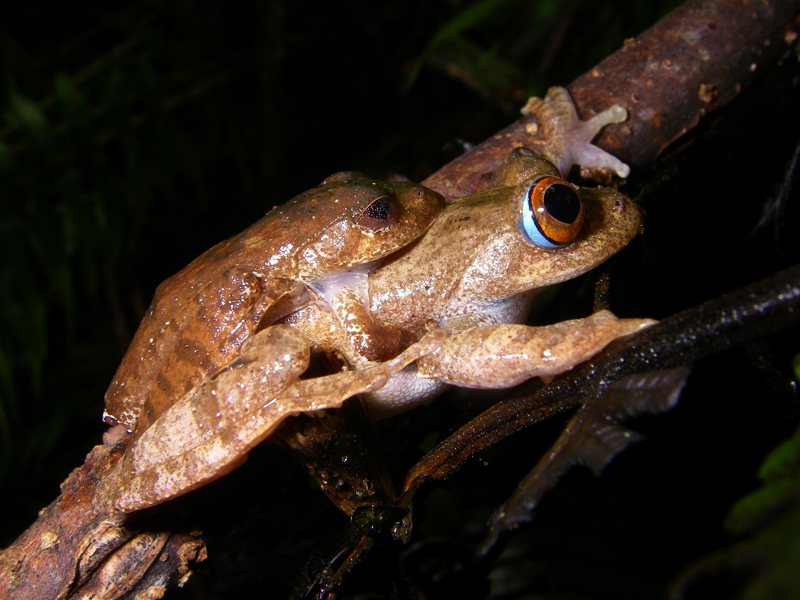
As known from other places in the world many of the species (all except Mantellinae) show amplexus. The Mantellinae have a derived mating system: they pair on leaves or rocks above water with the males being places above the femals and sperm runs over their body, fertilising eggs.